The refreshed Tesla Model Y (internally the “Juniper” update) is NACS-native — it charges from the Tesla connector for both home AC and Supercharger DC with no adapter on the Tesla side. That makes home charging refreshingly simple: a Tesla Wall Connector plugs straight in, or any J1772 Level 2 charger works with a J1772-to-NACS adapter. This guide covers the best home chargers for a Juniper, realistic charge times, breaker sizing, cost, and how Supercharging fits your routine.
| Charger | Connector | Why it fits Juniper | Buy |
|---|---|---|---|
| Tesla Wall Connector (Gen 3) | NACS native | Plug-and-go, 11.5 kW, Wi-Fi, power-share | Amazon |
| Emporia Level 2 (48A) | J1772 (+adapter) | Best value, energy monitoring | Amazon |
| ChargePoint Home Flex | J1772 (+adapter) | Adjustable 16–50A, networked | Amazon |
| Wallbox Pulsar Plus | J1772 (+adapter) | Compact 48A, polished app | Amazon |
| Lectron J1772-to-NACS adapter | Adapter | Use any J1772 charger | Amazon |
More options in our best home EV chargers 2026 roundup and the dedicated best chargers for Tesla guide.
The Tesla Wall Connector (Gen 3) is the cleanest home charger for a NACS-native Model Y. It delivers up to 11.5 kW (48A), connects to Wi-Fi for scheduling and firmware updates, and supports power-sharing if you add a second EV. Because the Juniper is native NACS, you plug in with no adapter and the car recognizes it instantly. For a ~75–80 kWh pack this means a full overnight charge with margin to spare.
If you already own a J1772 charger — or want a non-Tesla brand for features or price — add a rated J1772-to-NACS adapter and your Juniper charges from it normally. The Emporia Level 2 is our value favorite (app + energy monitoring); ChargePoint Home Flex is adjustable and networked; Wallbox Pulsar Plus is the compact 48A option. Our Tesla Wall Connector review and best charger for Model Y articles go deeper.
| Charger | Power | Juniper (≈75–80 kWh) full |
|---|---|---|
| 120V wall outlet (12A) | 1.4 kW | ~50+ hrs |
| 16A portable | 3.84 kW | ~20–22 hrs |
| 32A | 7.7 kW | ~10–11 hrs |
| 48A (Tesla WC / Emporia) | 11.5 kW | ~7–8 hrs |
A 48A charger fills the Juniper overnight; even a 32A unit covers a typical commute with room to spare. Avoid relying on a 120V outlet as your only charger — it is too slow for a 75 kWh pack.
If your panel is small, a 32A charger still delivers a full Juniper charge overnight and may avoid a panel upgrade. Our installation cost guide covers what to expect.
Home charging is cheap. At about $0.16/kWh, filling a 75 kWh Juniper costs roughly $12 — around 4 cents per mile, far below gasoline. A utility time-of-use rate often drops off-peak pricing below $0.10/kWh; our charging cost guide runs the numbers for your area. The Tesla app’s scheduled charging can target those off-peak hours automatically.
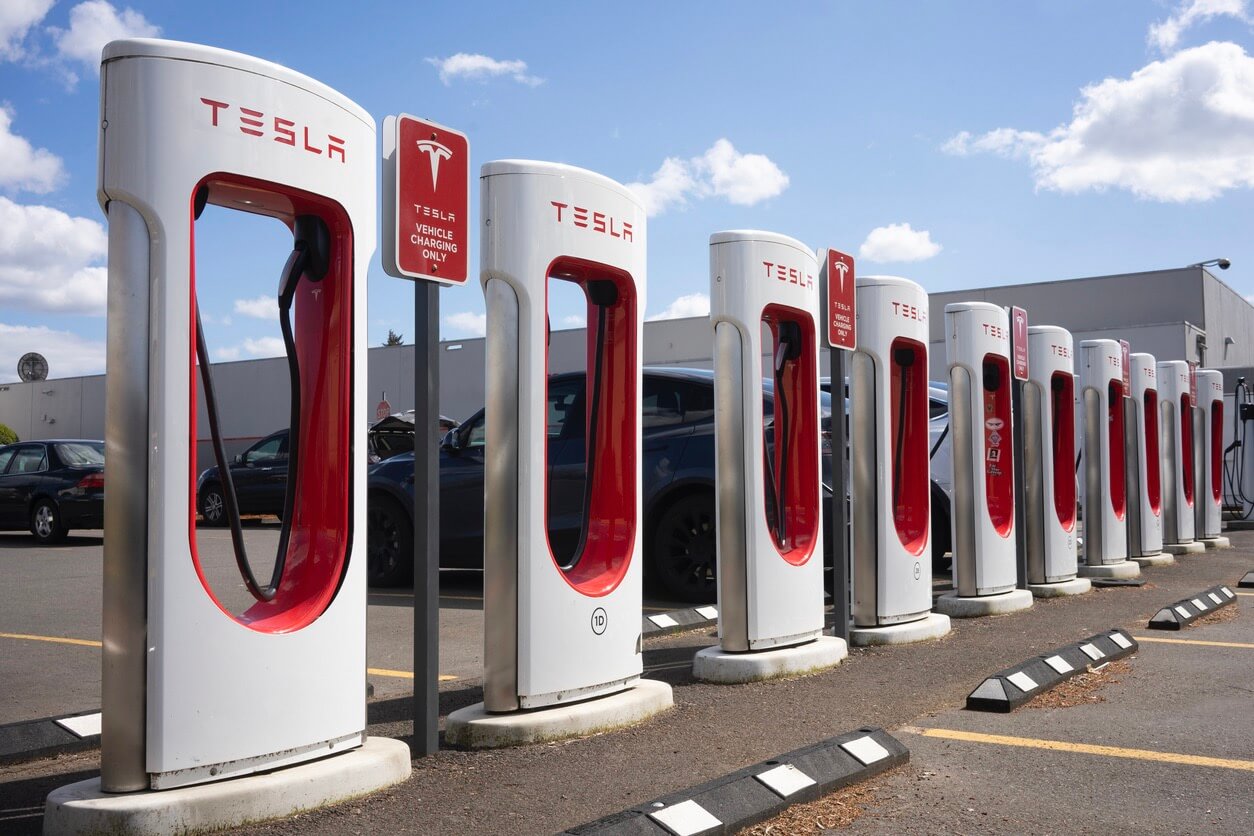
The Juniper’s native NACS port means Supercharger access is built in — pull up, plug in, and the car handles billing through your Tesla account. Use Superchargers for trips; use home Level 2 for daily fills (cheaper per mile and easier on the battery). The car’s nav plans routes around Superchargers automatically.
Cold weather temporarily cuts range because the pack must be warmed before peak charging. Pre-condition the cabin and battery while still plugged in so you leave with full range. Keep the daily charge limit around 80–90% (the Tesla app defaults are sensible) and reserve 100% for long trips to protect long-term battery health.
A portable is handy for cabins and travel. A 40A portable with a NEMA 14-50 plug works at RV parks; a 16A portable covers a 120V outlet. See our portable EV charger roundup. Renters should read our apartments & condos charger guide; the best charger for Model 3 is a sibling read.
A practical Juniper owner runs: a NACS home charger (Tesla Wall Connector or a J1772 unit + adapter) as the daily workhorse, a J1772-to-NACS adapter in the frunk for flexibility, and a portable as backup. Start with the home charger sized to your panel, then add adapters as needed. Our best home EV chargers 2026 and Tesla charger guide cover the hardware.
The Juniper refresh keeps the same NACS-native charging architecture as recent Model Y builds, so home and Supercharger behavior is consistent. The main ownership note is unchanged: a 48A home charger fully replenishes the ~75–80 kWh pack overnight, and Superchargers handle trips. Cabin and battery pre-conditioning improvements help cold-weather charging speed.
| Charger | Connector | Max amp | Power |
|---|---|---|---|
| Tesla Wall Connector | NACS | 48A | 11.5 kW |
| Emporia Level 2 | J1772 (+adapter) | 48A | 11.5 kW |
| ChargePoint Home Flex | J1772 (+adapter) | 50A | 12.5 kW |
| Wallbox Pulsar Plus | J1772 (+adapter) | 48A | 11.5 kW |
A 240V dedicated circuit with a breaker sized to the charger (60A for 48A) is required; a licensed electrician wires and grounds it, usually in a few hours. Our installation cost guide helps you budget.
At Superchargers, follow stall markings and move once charged during busy periods. At shared J1772 destinations, do not unplug other cars and free the spot when full. Our safety guide covers connector handling.
For a NACS-native Model Y Juniper, the Tesla Wall Connector is the obvious home anchor — native plug, no adapter, 11.5 kW, and Wi-Fi scheduling. If you prefer another brand or already own a J1772 charger, add a rated J1772-to-NACS adapter and keep using it. Either way you get a full charge overnight for pennies per mile, with Supercharger DC access built in for trips.
Lorem Ipsum is simply dummy text of the printing and typesetting industry
Complete guide to EV charger load management: dynamic load balancing, power sharing, static allocation. Wallbox, Autel, Emporia. Avoid panel upgrades...
Best Level 1 EV chargers for 120V outlet charging. Lectron dual-voltage, Tesla Mobile Connector, Emporia. Tips, costs, safety, when to...
Complete guide to scheduling EV charging: TOU rates, smart charger apps, solar surplus charging, cost savings calculator. Emporia, Wallbox, ChargePoint...




1 thought on “2026 Tesla Model Y Juniper Charging Guide: Best Home Chargers & Adapters”